Zoetrope
Also calledZoetrope effect, Strobe animation, Persistence of vision effect, Praxinoscope effect
A zoetrope is an optical device, and by extension a filming technique, that turns a ring of sequential static poses into the illusion of one continuous moving figure, using narrow slits or a synchronized strobe to reveal each pose for a split second. The eye's persistence of vision fuses the flashes together, giving the viewer a hypnotic, mechanical sense of motion that feels handmade rather than filmed.
What it tells
Directors reach for the zoetrope when they want motion that feels invented rather than captured, a nod to the handmade magic that predates cinema itself. It signals wonder, nostalgia, or the uncanny: a character discovering that a toy or a machine can trick the eye into seeing life. In market scenes, museum scenes, or dream sequences, the device becomes a visual metaphor for cinema's own origin, reminding the audience that every moving image is, at its root, a trick of persistence of vision.
How it is shot
Build or animate a drum, ring, or wheel divided into 10 to 24 equal segments, each holding a static figure in a slightly different pose than its neighbor, like a hand drawn cycle of a walk or a dance. Spin the drum at a steady rate, then reveal the figures only in flashes: physically, through narrow vertical slits cut into an outer cylinder that rotates with the drum, or through a strobe light pulsed at a frequency that matches the rotation so each flash lands on the next pose. Camera stays locked off, shutter speed set to catch the flash cleanly, frame rate high enough (48 to 60 fps) to avoid flicker banding. The faster the strobe relative to rotation, the smoother the illusion of a single continuous figure.
When to use it
- A carnival, museum, or night market scene where a mechanical toy needs to feel magical rather than digital.
- A title sequence or prologue that wants to reference the handmade origins of animation and cinema.
- A dream or memory sequence where motion should feel looped, uncanny, and slightly mechanical.
- A product or character reveal where a repeating cycle of poses should read as one fluid gesture.
Not to be confused with
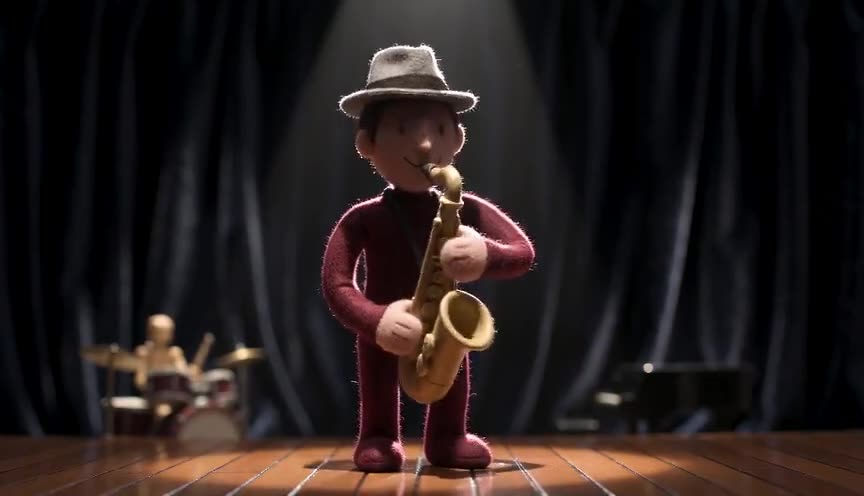
Stop motion animates a single figure frame by frame over time; a zoetrope arranges many static copies of that figure around a spinning ring and reveals them in flashes, so the motion happens instantly, not across separate takes.
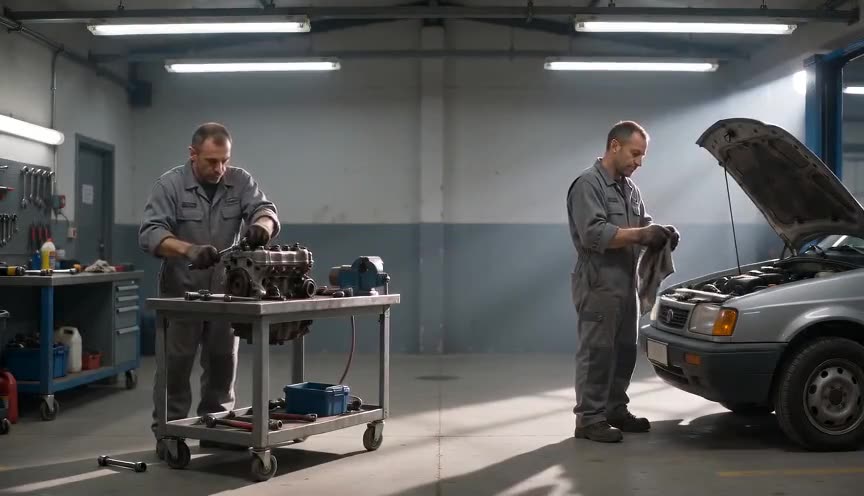
Duplication clones one subject into several visible copies within the same frame; a zoetrope also uses multiple copies of a pose, but hides all but one at a time behind a strobe or slit, so only one figure is ever seen moving.
In film
Hugo (2011)
Scorsese's homage to Georges Melies shows an actual zoetrope on screen, using the device to explain pre-cinema animation to a new generation of viewers.
Pauvre Pierrot (1892)
Émile Reynaud projected painted sequential drawings with his Théâtre Optique praxinoscope, making Pierrot and Columbine move through mirrored optical animation rather than photographed motion.
The prompt
Name the parts explicitly: a rotating drum or ring, a fixed number of sequential poses, and a strobe or slit that flashes in sync with the rotation. Tell the model the camera is locked off, since any camera movement breaks the illusion, and describe the flash rate relative to the rotation speed so the poses read as one fluid figure rather than a blur. Avoid vague words like 'looping' or 'animated' alone; anchor the effect in the physical mechanism (strobe, slits, drum) or the model will default to a simple seamless loop.
The exact prompt that rendered the video on this page. Keep the description of the move, change the subject and the setting.
Zoetrope effect at a night market in Taipei: a locked-off camera faces a large spinning cylindrical carousel mounted between food stalls, its inner wall lined with a dozen sequential painted figures of a lion dancer in incremental poses. A strobe light flashes in exact sync with the rotation, freezing each figure for a fraction of a second so the sequence fuses into one continuously leaping lion dancer, while the gaps between flashes show soft motion blur and glowing lanterns and neon signs blur past in the background. No text.
Common mistakes
Confusing it with a loop
Calling any repeating motion a zoetrope. Without a strobe or slit revealing discrete poses, the result is just a seamless loop or cinemagraph, not the stepped animation illusion.
Moving the camera
Panning, tilting, or zooming while the drum spins destroys the persistence of vision effect, since the eye needs a fixed frame to fuse the flashing poses into one figure.
Too few poses
Using fewer than about ten sequential poses around the ring makes the motion read as choppy stop motion instead of smooth continuous movement.
Frequently asked questions
What is a zoetrope?
A zoetrope is a pre-cinema optical device, and now a filming technique, in which a ring of sequential static poses is spun and revealed one at a time through slits or a strobe light, so persistence of vision fuses them into a single moving figure.
How is the zoetrope effect used in film?
Filmmakers use it as a prop or homage in scenes about pre-cinema history, carnivals, or toy shops, and as a standalone visual technique when they want motion that feels mechanical and handmade rather than shot with a normal camera.
What is the difference between a zoetrope and stop motion?
Stop motion photographs one figure in changing poses across separate frames over time. A zoetrope arranges many copies of those poses around a spinning ring and reveals them in an instant, so the illusion of motion happens live, not in post.
Can AI video tools generate a zoetrope effect?
Yes, if you describe the physical mechanism directly: a locked-off camera, a rotating ring of sequential poses, and a strobe or slit synced to the rotation. Imaginode's models render this convincingly from a prompt that names those three parts.