Duplication
Also calledClone shot, Multiplicity effect, Self-duplication
Duplication is an in-camera or compositing technique that places the same subject, filmed at different times, into two or more positions within a single frame. It lets one performer appear to interact with themselves, creating twins, clones or multiple versions of the same person sharing the same space.
What it tells
Directors reach for duplication when a story needs to visualize internal conflict, split identity or comic multiplication rather than describe it. A character arguing with their own clone, a worker keeping pace with three copies of himself, or a dreamer meeting past and present versions of themselves all use the same trick: the eye accepts one continuous space, so the impossible reads as real. The effect turns abstract ideas (doubt, duality, deja vu) into something the audience can watch happen, without a line of dialogue.
How it is shot
The camera is locked to a tripod or motion-control rig so every take shares the exact frame, height and lens, commonly 35mm or 50mm. The performer plays the scene once, then repeats it in a different position while the area already used is masked off, often with a fixed matte line or a black flag out of frame. Each pass is recorded on a separate card, then composited in post with a hard matte, a luma key, or a mask tracked frame by frame. Matching light direction, shadow length and floor contact between passes matters more than anything, since even a half-stop exposure shift breaks the illusion. Modern pipelines use motion control for identical moves, or generate the duplicate directly from a single locked-off shot.
When to use it
- A character needs to confront, argue with or comfort a literal version of themselves onscreen.
- A comedic scene calls for one actor to multitask as several identical coworkers or clones.
- A dream, memory or time-loop sequence needs past and present selves sharing one space.
- A process demo benefits from showing several stages of the same task at once, side by side.
Not to be confused with
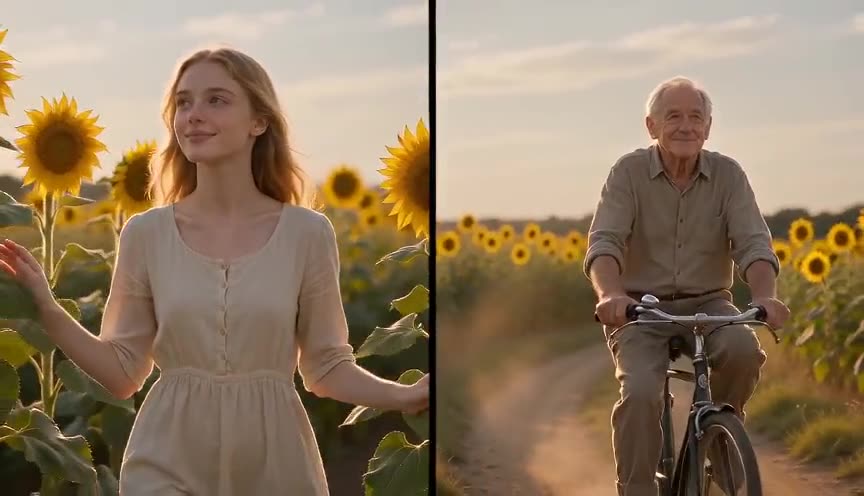
Split screen divides the frame with a visible or hidden dividing line between separate shots. Duplication keeps one continuous, seamless frame so the copies appear to share the same physical space and light.

Double exposure layers two images with visible transparency, letting one show through the other. Duplication keeps each copy fully opaque and solid, as if two real bodies occupy the same room.
In film
Multiplicity (1996)
Builds an entire comedy around one actor duplicated into several clones sharing the frame, each with a slightly degraded personality.
Adaptation (2002)
Places one actor as twin brothers in the same room repeatedly, using locked shots and matched lighting to sell the duplication.
The Social Network (2010)
Uses digital face replacement and compositing so Armie Hammer appears as both Winklevoss twins together in shared shots.
The prompt
State plainly that the same person appears twice or three times in one continuous shot, and describe where each copy stands, what each is doing, and that the camera does not move. Lock the camera and keep light, wardrobe and pose consistent between copies so the model does not vary faces or clothing by accident. Avoid vague terms like clone effect; spell out positions (left, center, right) and actions instead. Skip fast camera moves, which make the illusion harder to sell in a short clip.
The exact prompt that rendered the video on this page. Keep the description of the move, change the subject and the setting.
Duplication shot in a car repair garage: a static locked-off camera on a tripod frames a mechanic in gray overalls standing at a workbench on the left, tightening a bolt on an engine part, while an identical copy of the same mechanic stands at the open car hood on the right, wiping his hands with a rag. Both figures share the same fluorescent overhead light and concrete floor, moving independently but never touching or overlapping. The camera does not pan, tilt or zoom for the full four seconds. No text.
Common mistakes
Mismatched light between passes
Shooting the copies at different times of day or with different exposure settings makes the seam between them obvious, since shadows and color temperature no longer match.
Camera drift
Even a slight handheld wobble or a re-set tripod between takes shifts the frame just enough that the mask line becomes visible around the duplicated subject.
Copies that look choreographed
If both versions glance at the same spot or move in the same rhythm, the trick reads as staged mirroring instead of two independent people sharing one space.
Frequently asked questions
What is duplication in filmmaking?
It is a technique that places the same subject, shot at different times, into two or more positions in one frame, so the person appears to share the scene with copies of themselves.
How is duplication different from casting a twin actor or a stunt double?
Twins or doubles use two different bodies filmed together. Duplication uses one performer filmed separately for each pass, then combined, which is why lighting and framing must match exactly.
Can duplication be done live on set without visual effects?
Yes, using a locked camera, careful blocking and in-camera masking with flags or split filters, a technique used long before digital compositing existed.
Does AI video generation handle duplication well?
It can, if the prompt fixes the camera and clearly separates each copy's position and action. Tools like those on Imaginode do best when the scene stays simple and the shot is short.