Master shot
Also calledcover shot, wide coverage, safety shot
A master shot is a wide take that runs through an entire scene from a single, uninterrupted vantage point, capturing all the action and dialogue as it happens. It gives the editor a full, uncut record of the scene to fall back on when cutting in closer shots.
What it tells
Directors shoot a master first because it locks the geography of the scene: where each actor stands, how they move, and how the light falls across the room. It becomes the safety net of the edit, the shot you return to if a close-up doesn't cut, and it lets actors play a scene in full instead of in fragments. Emotionally, it lets the audience read relationships and blocking before the story narrows its attention.
How it is shot
The camera is locked on a tripod or dolly at a wide-to-medium-wide framing, wide enough to hold every actor and the set pieces they interact with, usually 24mm to 35mm on a full-frame sensor. The crew lights the whole space evenly, since the wide angle will show walls, ceiling and floor, not just faces. Actors run the scene from entrance to exit without stopping, so blocking is rehearsed and marked on the floor beforehand. The director calls action once and lets the take play out complete, often several minutes long, before moving on to shoot the same scene again in medium shots, close-ups and inserts that will be intercut with this base layer in the edit.
When to use it
- Shooting a dialogue scene you plan to cut into coverage later, to lock blocking and timing first.
- Filming a group scene where every performer's position and movement must stay consistent across takes.
- Establishing how characters relate in space before the edit isolates them in closer shots.
- Working with a small crew or tight schedule, since one wide take can cover the whole scene.
Not to be confused with
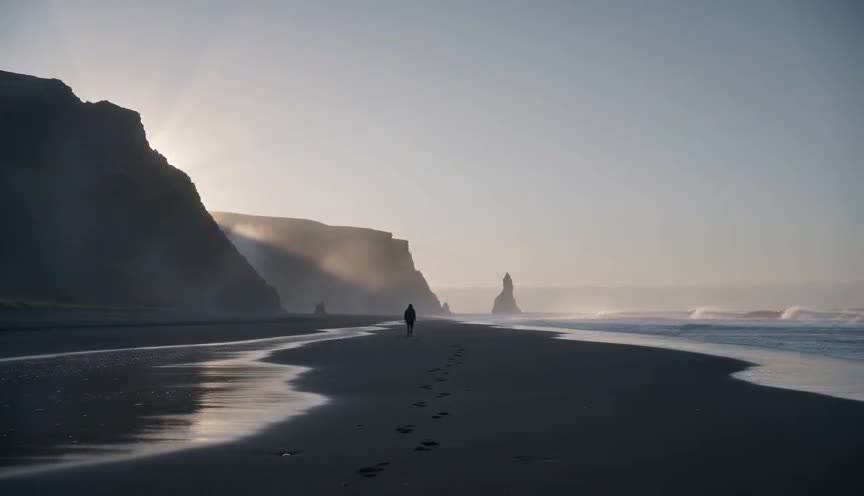
An establishing shot sets a location or time of day, often exterior, and is usually a single brief image, while a master shot runs an entire scene's action from one wide vantage inside it.
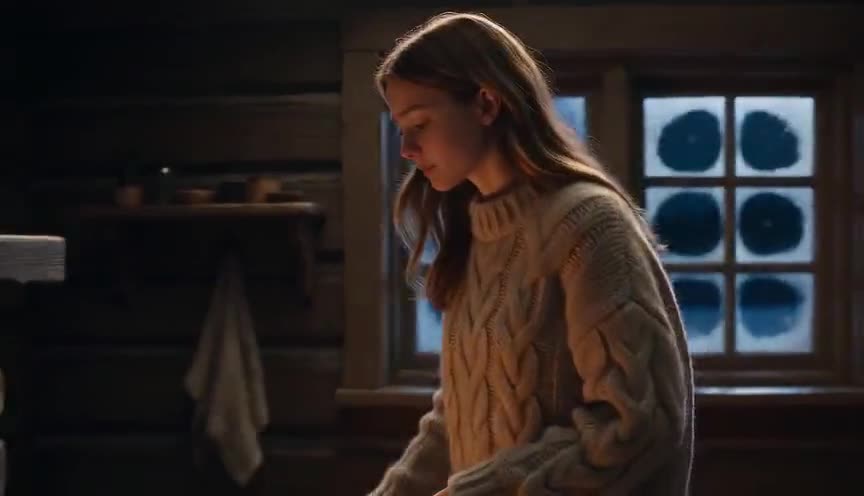
A long take is defined by duration and often camera movement within a single unbroken shot, while a master shot is defined by its editorial role: a wide, static base covering the whole scene for later intercutting.
In film
Citizen Kane (1941)
Deep-focus master shots hold entire rooms in sharp detail, letting foreground and background actors play a scene together without cutting.
The Best Years of Our Lives (1946)
William Wyler uses deep-focus wide masters in domestic and bar scenes, letting full dramatic exchanges unfold across foreground and background action without cutting.
The prompt
Describe the master shot as a single locked-off wide frame that holds the entire room and every subject in it for the full four seconds. Name the lens, around 24mm to 35mm, state that the camera does not move, and specify that all action happens within frame, not off camera. Avoid asking for cuts, close-ups or camera movement, since those break the master shot. Keep blocking simple: who enters, who stays, what they do, so the model has a full scene to render instead of a fragment.
The exact prompt that rendered the video on this page. Keep the description of the move, change the subject and the setting.
Master shot of a Victorian library, a wide locked-off frame from a tripod holding the entire room: two floor-to-ceiling bookshelves, a rolling ladder, and a reading table lit by a green-shaded lamp. An elderly woman in a shawl enters from the left, crosses to the shelves, and hands a leather-bound book to a young man waiting by the table. The camera does not move, pan, or zoom; both figures remain fully visible at all times, lit by warm practical lamps and soft window light. Shot on a 28mm lens, deep focus keeps foreground and background sharp. No text.
Common mistakes
Framing too tight
Cropping the master so an actor's exit or entrance falls outside frame defeats its purpose as a complete record of the scene.
Moving the camera
Panning or dollying during the master blurs its role as a stable reference shot and makes matching later coverage harder in the edit.
Under-lighting the wide
Lighting only for a close-up leaves the corners of a wide frame dark or flat, since the master shows the whole set, not just a face.
Frequently asked questions
What is a master shot?
A master shot is a wide, usually static shot that captures an entire scene from beginning to end in one continuous take, showing all the actors and action so the editor has a complete version of the scene to work from.
Why do directors shoot a master shot first?
Shooting the master first locks blocking, timing and lighting for the whole scene, giving the crew and actors a rehearsed baseline before breaking the scene into closer, more efficient shots.
Does a master shot ever move?
Most masters are locked-off or use a slow, simple move like a pan or slight dolly, but the point is to keep the whole scene in frame, not to add dynamic camera work.
Can AI video tools generate a convincing master shot?
Yes, tools like those on Imaginode can render a static wide shot if you specify a locked camera, name the lens, and describe every subject's position and action within the single frame.