Medium shot
Also calledMid shot, MS, Waist shot
A medium shot frames a subject roughly from the waist up, keeping enough body language visible while still reading facial expression clearly. It gives the viewer a balanced dose of information and emotion, neither the intimacy of a close-up nor the context of a wide shot.
What it tells
Directors reach for the medium shot when a scene needs conversation to feel natural and grounded. It lets an actor's hands, posture and gesture carry as much meaning as the face, which suits dialogue, negotiation and everyday interaction. It is the default size for storytelling because it rarely calls attention to itself, letting the writing and performance lead while the camera simply observes at a comfortable, human distance.
How it is shot
Frame the subject from roughly the waist to just above the head, leaving a little headroom and lead room if they are moving or looking off-frame. A 35mm to 50mm lens on a full-frame sensor at eye level, about 6 to 10 feet from the subject, reproduces natural perspective without distortion. Depth of field is usually moderate, f/2.8 to f/5.6, enough to soften the background while keeping the whole body sharp. The shot is often static or on a slight, slow drift, and it is the standard size for shot-reverse-shot dialogue coverage, cut on a clean line reading or a gesture.
When to use it
- Filming dialogue between two people where gestures and posture matter as much as expressions
- Introducing a character in a way that shows both identity and body language
- Covering physical action like cooking, working or handling objects at a natural distance
- Building a scene's baseline shot before cutting closer for emphasis or wider for context
Not to be confused with
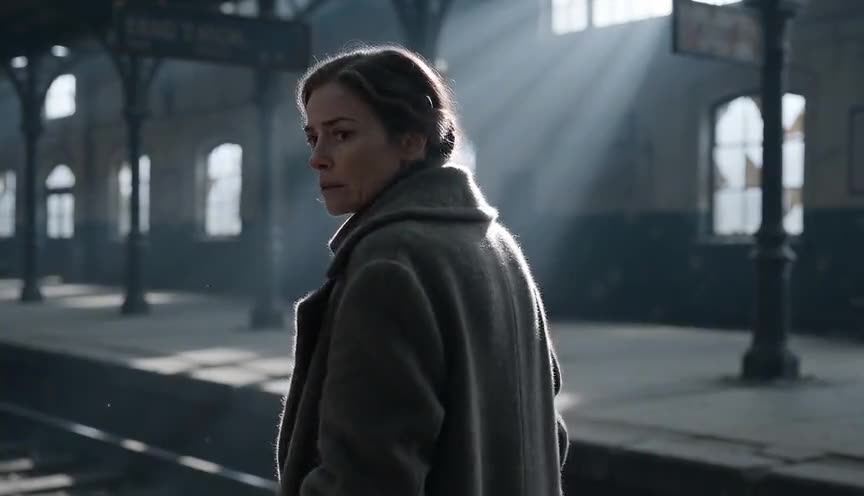
A medium close-up crops around the chest, pushing closer for emotional weight, while the medium shot keeps hands and torso visible for gesture and body language.
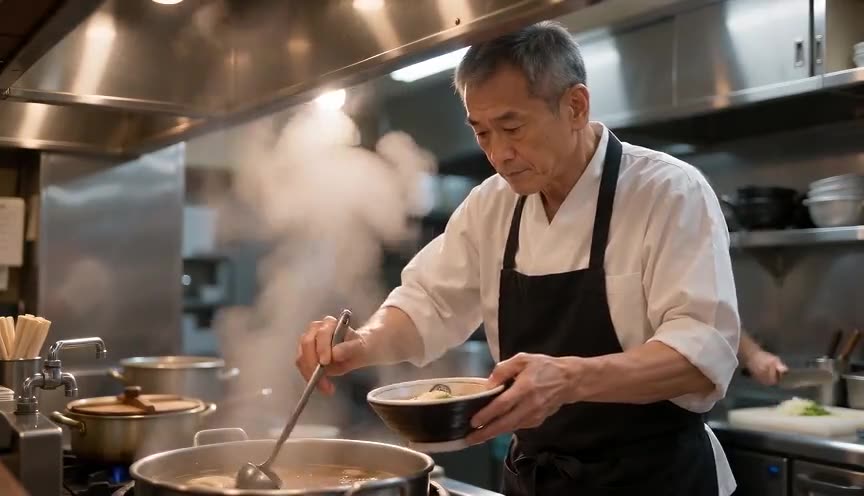
A cowboy shot frames from mid-thigh, wide enough to include a holster or hands on hips, while the medium shot cuts higher, around the waist, for tighter conversation framing.
In film
Pulp Fiction (1994)
Much of the dialogue between characters in diners and cars is shot in medium framing that keeps hand gestures and posture in play.
Before Sunrise (1995)
Long walking conversations are largely covered in medium shots that let body language carry the growing intimacy.
The prompt
Say the frame line explicitly, waist-up or chest-up, and name the lens (35mm or 50mm) since AI models often default to closer or wider crops than intended. Specify eye-level camera height and a shallow-to-moderate depth of field so the background stays present but soft. State whether the camera is locked off or drifting slightly, and describe what the subject's hands or posture are doing since that is the point of this framing.
The exact prompt that rendered the video on this page. Keep the description of the move, change the subject and the setting.
Medium shot, waist-up framing, of a woman in her fifties leaning on a stone parapet on a Parisian rooftop at golden hour, wind gently moving her loose hair and coat. Camera is static at eye level, 50mm lens, moderate depth of field with the city rooftops and a distant Eiffel Tower silhouette softly blurred behind her. She turns her head slowly toward camera and rests her forearms on the ledge, hands loosely clasped. No text.
Common mistakes
Cropping at odd body points
Cutting the frame at an elbow or knee instead of the waist creates an awkward, amputated look; keep the line clean at a natural joint.
Ignoring hands
The medium shot exists to show gesture; if the subject's hands stay out of frame or motionless, the size loses its purpose.
Wrong lens choice
A wide lens up close distorts the body and background; use 35mm to 50mm at a proper working distance to keep proportions natural.
Frequently asked questions
What is a medium shot?
A medium shot is a framing that shows a subject roughly from the waist to the top of the head, balancing facial expression with visible body language and gesture. It is the most common size used for filming conversation.
What is the difference between a medium shot and a medium close-up?
A medium shot frames from the waist up, showing hands and posture; a medium close-up crops tighter, around the chest, prioritizing facial expression and reducing how much body is visible.
Why is the medium shot used so often in dialogue scenes?
It gives equal weight to what a character says and how they physically say it, gesture, posture, small movements, which makes conversation feel natural without the heightened intimacy of a close-up.
Can AI video tools generate an accurate medium shot?
Yes, tools like the ones on Imaginode can produce accurate medium shots if you specify the waist-up crop, lens focal length and eye-level camera height explicitly, since models otherwise tend to guess the framing.