Reaction shot
Also calledReaction cut, Cutting to the listener
A reaction shot cuts away from the main action to show a character's face or body responding to it. It tells the viewer how to feel about what just happened by showing them how someone else feels about it.
What it tells
Reaction shots let the audience borrow another character's emotion instead of inventing their own. A joke lands harder when we see a bystander trying not to laugh, a threat feels real when we see fear cross someone's eyes, a reveal gains weight from a held stare. Directors use the reaction to control pacing (a beat of silence after the line), to redirect attention (from the speaker to the listener), and to build empathy by making the audience feel a scene through a specific human face rather than the raw event itself.
How it is shot
Shoot a medium close-up or close-up, usually 50mm to 85mm on a full-frame sensor, at eye level or a slight low angle if the reacting character needs to feel small. Keep the frame still or on a very slow, almost imperceptible push so nothing distracts from the face. Light with a soft key and a touch of fill so the eyes read clearly, since the reaction lives in micro-expressions: a jaw tightening, a blink, a held breath. Timing matters more than coverage: editors often let the reaction run half a second longer than instinct suggests, sometimes cutting on the exhale rather than the inhale, to let the audience register the emotion before moving on.
When to use it
- After a punchline, insult, or shocking line of dialogue, to let the audience gauge the impact
- During a silent standoff or negotiation, to show who is winning without a word being spoken
- When revealing information the character already knows but the audience just learned
- In a group scene, to single out the one person whose feelings actually matter to the story
Not to be confused with
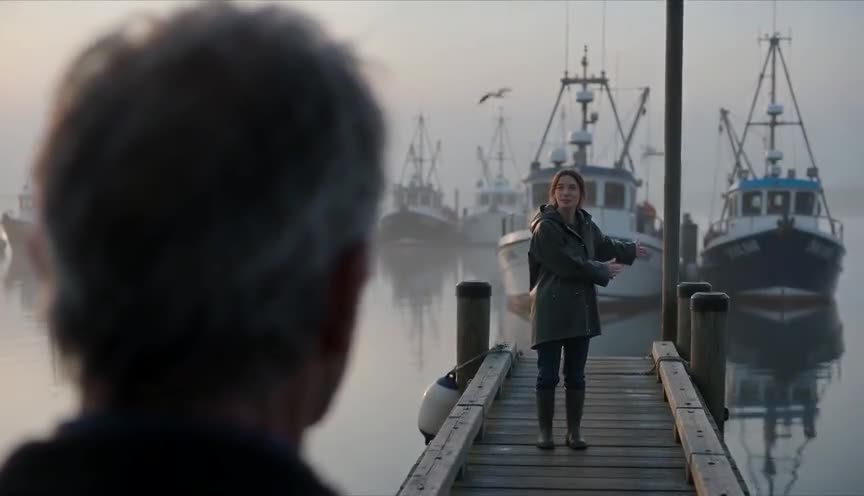
Over-the-shoulder frames a listener's shoulder in front of the speaker to establish spatial relationship during dialogue. A reaction shot isolates the listener's face alone, prioritizing emotion over geography.
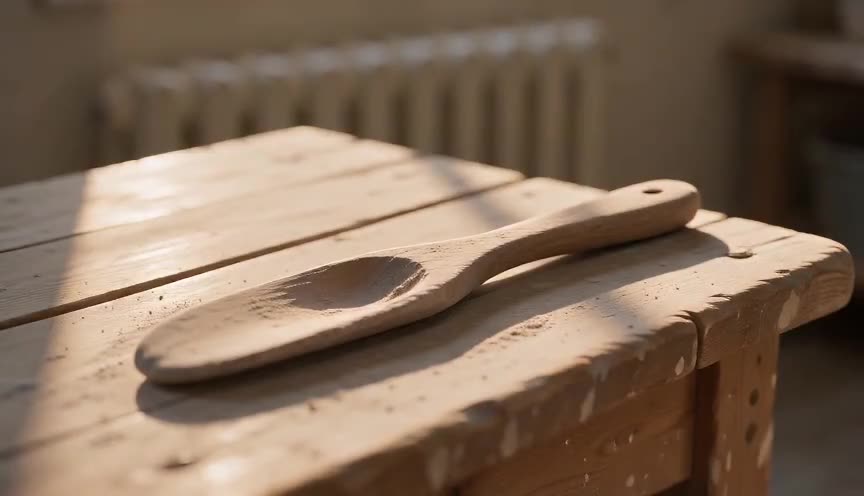
A cutaway shows something unrelated to the main subject, like an object or a different location, to add context. A reaction shot stays on a person and is directly tied to what they just witnessed.
In film
Jaws (1975)
The famous dolly zoom on the beach doubles as a reaction shot, pushing into Brody's face as he realizes the shark has struck again.
The Silence of the Lambs (1991)
Close-up reaction shots of Clarice in her meetings with Lecter let the audience read her fear, intelligence, and resolve between his lines.
The prompt
Name the shot size (close-up or medium close-up) and the lens so the model frames tight on the face rather than showing the trigger event. Describe the specific facial change over the four seconds (a smile fading, eyes widening, a jaw clenching) since the model needs a clear physical action to animate. Avoid vague words like 'emotional' or 'shocked' alone; give the muscles something to do, and keep the background implied rather than staged as the main event.
The exact prompt that rendered the video on this page. Keep the description of the move, change the subject and the setting.
Reaction shot, medium close-up on a young woman's face at an arcade cabinet, 50mm lens, camera locked off and level with her eyes. Colored neon light from the game screen flickers across her skin in pink and cyan. Her eyes widen, her mouth opens slightly, then curls into a disbelieving grin as she registers a high score flashing off-screen to her left. Background stays soft and dark, out of focus arcade machines glowing behind her. No text.
Common mistakes
Cutting too early
Cutting away from the reaction before the emotion fully registers robs the audience of the payoff. Let the face hold a beat longer than feels comfortable in the edit.
Generic surprised face
A stock wide-eyed open-mouth expression reads as fake. Build the reaction from a specific, smaller physical detail like a delayed blink or a tightened jaw.
No spatial logic
If the reaction shot does not match eyeline or direction with what the character is reacting to, the cut feels disconnected even if the emotion itself is convincing.
Frequently asked questions
What is a reaction shot?
It is a shot, usually a close-up or medium close-up, that shows a character's face or body responding to an event, line, or another character, used to guide the audience's emotional read of a scene.
How long should a reaction shot last?
Long enough for the emotion to register but short enough to keep pace, typically half a second to two seconds. Editors often trim on instinct then add a frame or two back once they see it against the preceding shot.
What lens is best for a reaction shot?
An 85mm or 50mm portrait lens on a full-frame camera is common because it flatters the face and gives a shallow depth of field that isolates the expression from the background.
Can AI video tools generate a convincing reaction shot?
Yes, if the prompt describes a specific facial change over time rather than a static emotion label. Tools like the ones on Imaginode respond better to physical detail (a fading smile, a widening eye) than to abstract mood words.