Fast motion
Also calledUndercranking, Speeded-up footage, Sped-up motion
Fast motion plays footage back faster than it was recorded, compressing real time into a shorter screen time. It makes movement look sped up, jittery and exaggerated, telling the viewer to read the scene as comic, chaotic or a quick passage of time.
What it tells
Fast motion strips a moment of its natural weight. Gestures that would read as normal at real speed become frantic and slightly absurd, which is why it has been comedy's default gag since the silent era. Beyond jokes, it compresses drudgery, travel or bureaucracy into a few seconds, letting the story skip past dead time while still showing it happen, and it can turn ordinary labor into an anxious, machine-like blur.
How it is shot
The classic method is undercranking: the camera shoots at a lower frame rate than the projection rate, for example 8 to 12 fps captured and played back at 24 fps, so every real second is stretched over fewer frames and motion jumps forward. Today most productions shoot at normal frame rate (24 or 30 fps) and speed the clip up 2x to 10x in the edit, discarding frames evenly. Lighting and blocking must stay clean and repeatable since any wobble or hesitation reads as comic at speed. Sound is usually replaced or removed, since sped-up dialogue rarely works, and music or foley carries the rhythm instead.
When to use it
- Turning a tedious task, like packing or cleaning, into a quick comic beat
- Compressing a commute, a shift or a night of work into a few seconds
- Building manic energy in a chase, a party or a crowded public space
- Signaling that a character or a place is overwhelmed, rushed or out of control
Not to be confused with
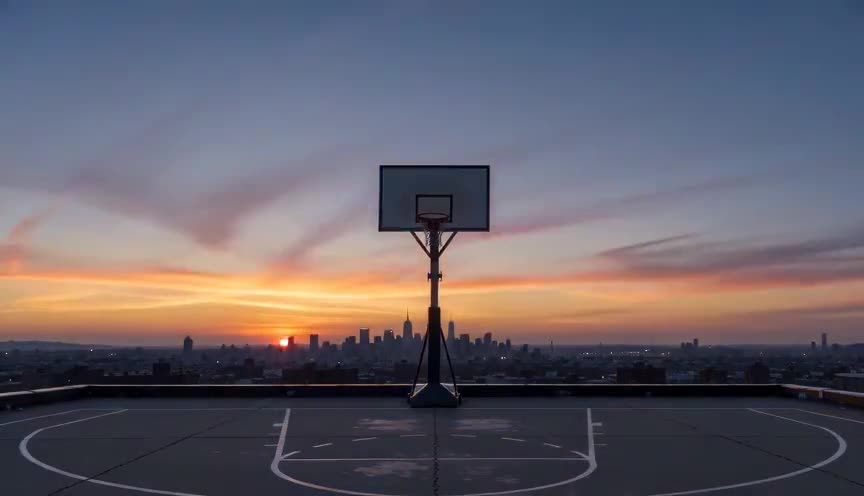
Time-lapse compresses very long, mostly static processes (clouds, construction, a whole day) shot at wide intervals over hours. Fast motion speeds up ordinary human action captured in real time over seconds or minutes.
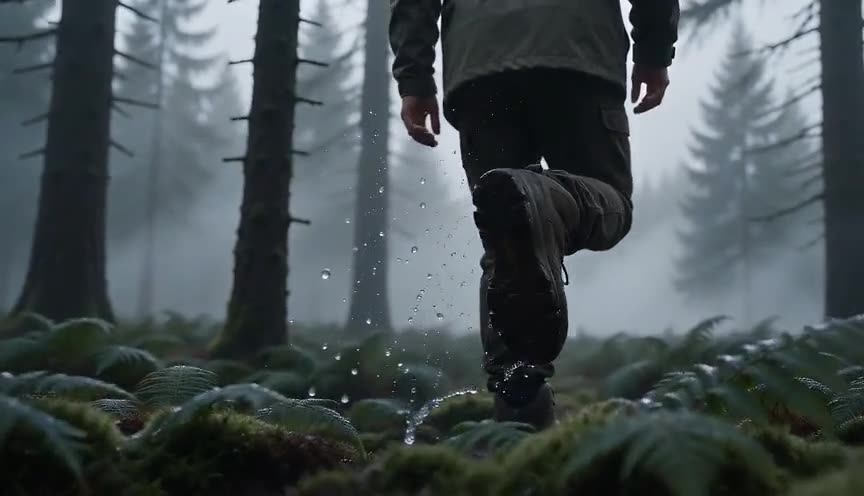
Slow motion stretches a moment for weight and spectacle by overcranking the camera. Fast motion does the opposite: it compresses a moment for comedy, chaos or speed by undercranking or by editing footage faster.
In film
A Clockwork Orange (1971)
Kubrick speeds up an intimate scene to strip it of romance and make it grotesquely comic, a signature use of fast motion for tone rather than plot.
Run Lola Run (1998)
Tykwer intercuts fast motion with sprinting real-time footage to push the film's frantic, ticking-clock energy across Berlin.
Requiem for a Dream (2000)
Aronofsky uses sped-up domestic and street footage inside montages to visualize addiction accelerating out of control.
The prompt
Name the technique directly (fast motion, sped up, undercranked) and describe what stays normal versus what accelerates, since AI models default to uniform real-time motion otherwise. Specify a fixed or slowly moving camera, a clear multiplier feel (roughly 2x to 5x), and a repetitive human action that reads well blurred, like walking, sorting or serving. Avoid asking for dialogue or lip-sync, since sped-up speech renders badly, and avoid mixing in slow-motion language, which confuses the model.
The exact prompt that rendered the video on this page. Keep the description of the move, change the subject and the setting.
Fast motion sequence in a 1930s hotel lobby with marble floors, brass elevator doors and potted palms. The camera stays locked on a wide static shot as bellhops in pressed uniforms dart between guests, spin luggage carts and flip through registration books at roughly four times normal speed, their footsteps a blur while the chandelier above hangs perfectly still. Guests check in and vanish through revolving doors in rapid bursts, motion trailing at the edges, the whole scene compressed into one unbroken, accelerated take. No text.
Common mistakes
Speeding up the camera move too
If a pan or dolly is sped up along with the actors, the whole frame swims unnaturally. Keep the camera static or barely moving and let only the subjects accelerate.
Forgetting the blur
Real fast motion has a slight trailing blur and choppiness from dropped frames. A perfectly crisp, smooth speed-up looks like a video game, not undercranked film.
Confusing it with time-lapse
Describing hours of change (light shifting, crowds cycling) instead of a single continuous real-time action gets you a time-lapse result, not the comic energy of fast motion.
Frequently asked questions
What is fast motion?
Fast motion is footage played back faster than it was shot, so real-time action looks accelerated and slightly jittery. It is used for comedy, to compress dull stretches of time, or to build a sense of chaos and urgency.
How is fast motion different from a time-lapse?
Fast motion speeds up continuous real-time human action captured over seconds or minutes. A time-lapse samples a much longer, usually static process, like clouds moving or a plant growing, over hours or days, with frames shot at wide intervals.
How did filmmakers create fast motion before digital editing?
They undercranked the camera, shooting fewer frames per second than the standard projection rate. When that slower footage played back at normal speed, every action looked sped up, a technique used since silent comedy.
Can AI video generators produce a convincing fast motion effect?
Yes, if the prompt names the technique explicitly and describes a fixed camera with a repetitive human action and a rough speed multiplier. Tools like those on Imaginode respond well to concrete, physical descriptions rather than vague speed requests.