Dutch angle
Also calledcanted angle, oblique angle, tilted frame
The Dutch angle is a shot composed with the camera rolled so the horizon line sits diagonally instead of level. It disturbs the viewer's sense of visual stability, reading as unease, danger or a mind coming apart.
What it tells
Directors reach for the Dutch angle when the world on screen has stopped making sense to the character in it. A tilted frame will not let the eye settle, so it becomes a shorthand for madness, drunkenness, dread or moral corruption without a line of dialogue. Used sparingly, it punctuates a scene like an alarm. Used constantly, it can flatten into a stylistic tic, which is why most cinematographers save it for the one moment that needs to feel wrong.
How it is shot
The camera is rolled around its optical axis, typically between 5 and 45 degrees, so the horizon and vertical lines in the frame cut across it diagonally instead of running level. This can be set on a static tripod head with the bubble level deliberately ignored, dialed in on a gimbal or fluid head, or added later by rotating the frame in post and cropping to fill the widescreen. Wider lenses (24mm to 35mm) exaggerate the tilt because verticals bow more at the edges; longer lenses read as a milder, more graphic skew. The angle is usually locked for the shot rather than eased in, so the disorientation hits on the cut, not gradually.
When to use it
- A character realizes they are being deceived, drugged, or losing control of the situation
- A flashback, nightmare, or hallucination sequence that should feel unmoored from normal reality
- An action beat where the fight or chase has tipped into chaos and confusion
- A single punctuating shot in an otherwise level-framed scene, right before violence or a reveal
Not to be confused with
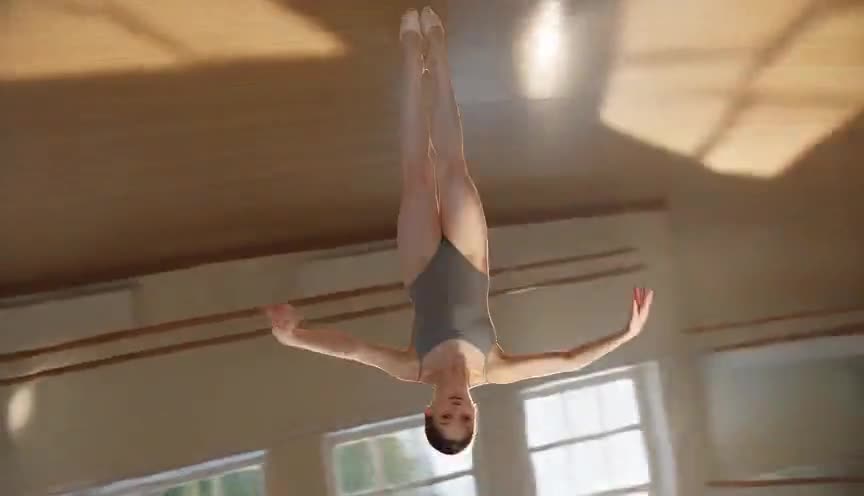
A camera roll is the movement of tilting the frame during the shot, from level to canted or back. A Dutch angle is usually the held, static result of that roll, composed and locked for the whole shot.
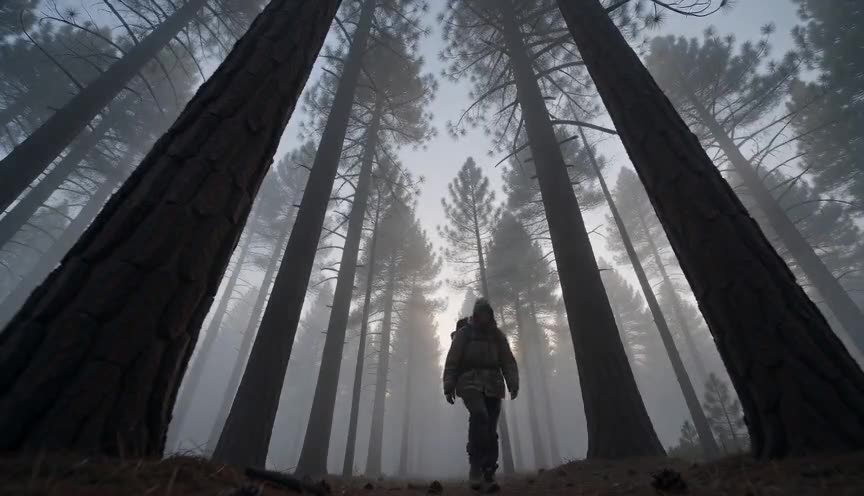
A low angle tilts the camera up on the vertical axis to make a subject loom, but the horizon stays level. A Dutch angle rolls the frame sideways instead, keeping the eyeline flat but the horizon crooked.
In film
The Third Man (1949)
Carol Reed cants dozens of shots in postwar Vienna, building a sustained sense of paranoia and moral rot in Harry Lime's world.
Thor (2011)
Kenneth Branagh applies Dutch angles across many scenes to give Asgard a heightened, off-kilter comic-book energy, a use often cited in film school critiques.
The prompt
Name the roll explicitly, such as 'camera rolled 20 degrees off horizontal' or 'frame canted so the horizon runs diagonally', since models often read 'Dutch angle' loosely. Anchor the tilt to something the viewer recognizes as normally vertical or level, like a doorway, a wall, or a horizon line, so the skew is unmistakable. Avoid asking for extreme rotation past 45 degrees, which some models render as a spinning or upside-down shot instead of a held canted frame. Keep the rest of the shot still or slow so the tilt itself, not camera motion, carries the unease.
The exact prompt that rendered the video on this page. Keep the description of the move, change the subject and the setting.
Dutch angle, static shot of a hooded traveler standing alone in a narrow medieval stone village lane at dusk, the camera locked but rolled about 25 degrees off horizontal so the stone walls and rooflines slant sharply across the frame instead of running level. Torchlight flickers in a wall sconce, casting long unstable shadows across the cobblestones. The traveler slowly turns their head toward an alley, the tilted horizon making the empty lane feel unsteady and threatening. Camera does not pan or straighten during the shot. No text.
Common mistakes
Tilting every shot
If the whole scene is canted, the audience adapts and the technique loses its shock value. Save the Dutch angle for the one moment that needs to feel wrong.
Angle too shallow to read
A 3 to 5 degree tilt often looks like a leveling mistake rather than a choice. Commit to a clearly readable angle, generally 15 degrees or more, so intent is obvious.
No level reference in frame
Without a door frame, horizon, or vertical wall to contrast against, the tilt has nothing to read against and can look like a framing error instead of a deliberate device.
Frequently asked questions
What is a Dutch angle in film?
It is a shot where the camera is rolled so the horizon and vertical lines sit diagonally in the frame instead of level. Filmmakers use it to signal that something in the scene, or in a character's mind, has gone off balance.
Why is it called a Dutch angle?
The name likely comes from a mistranslation of 'Deutsch' (German), tracing back to the tilted, expressive compositions of German Expressionist filmmakers in the 1920s rather than anything specifically Dutch.
How many degrees should a Dutch angle be tilted?
Most working examples sit between 10 and 30 degrees. Below that it can read as an accident; well past 45 degrees it starts to feel like a spinning or inverted shot rather than a canted frame.
Can an AI video model generate a convincing Dutch angle?
Yes, tools such as those on Imaginode render it reliably if you describe the roll in degrees and anchor it to a visible vertical or horizon line, since vague requests for 'Dutch angle' alone are sometimes ignored or overdone.