Two-shot
Also called2-shot, duo shot, double shot
A two-shot is a shot framed to hold two people in the same frame at once, typically from the waist or chest up. It lets the viewer read both faces, both bodies and the space between them at the same time, without cutting, so the relationship becomes visible rather than described.
What it tells
Directors reach for the two-shot when the story lives between two people rather than inside one. Keeping both actors in frame preserves the balance of power, the distance they choose to keep or close, and the timing of their reactions to each other in real time. A cut to singles hands that control to the editor; the two-shot leaves it with the actors, letting a hand drift closer or a body turn away carry the scene. It is the natural frame for negotiation, courtship, rivalry and reunion.
How it is shot
Position the camera so both subjects sit inside the frame, usually shoulder to shoulder, angled toward each other, or one slightly behind the other, with headroom balanced between them. A 35mm or 50mm lens at eye level keeps both faces legible without distorting the closer one; wider lenses fit more background, tighter lenses compress the space between the actors. Focus splits evenly across both faces, so the stop needs to be deep enough (f4 to f8) that neither one falls soft when they shift weight. Blocking matters more than camera work: actors are placed and rehearsed to move within the frame, turning, stepping in or pulling back, so the shot stays alive without any camera movement at all.
When to use it
- Two characters negotiate, argue or flirt and the balance of power between them needs to stay visible.
- A reunion or goodbye where both reactions matter equally and cutting away would break the moment.
- Establishing a relationship early in a scene before splitting into singles for close reactions.
- A walk-and-talk or shared task where physical proximity itself carries part of the story.
Not to be confused with
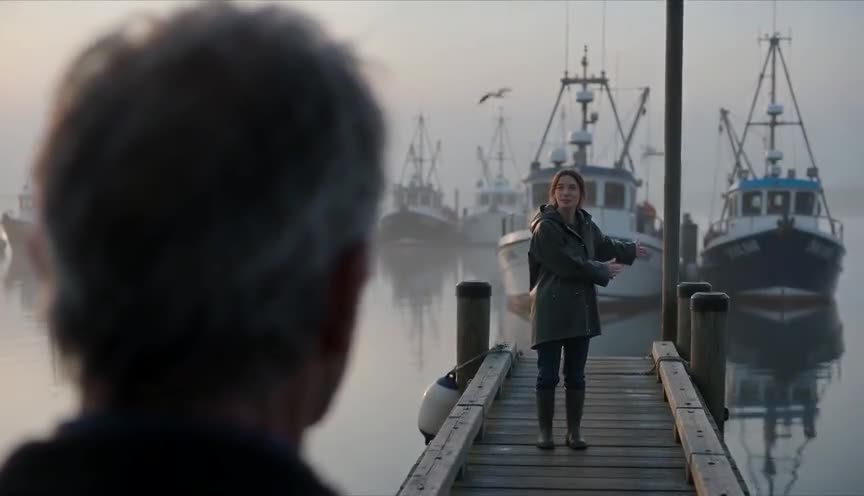
Over-the-shoulder favors one character's point of view, with the other's shoulder and head in frame; a two-shot treats both subjects equally, without privileging either one's perspective.
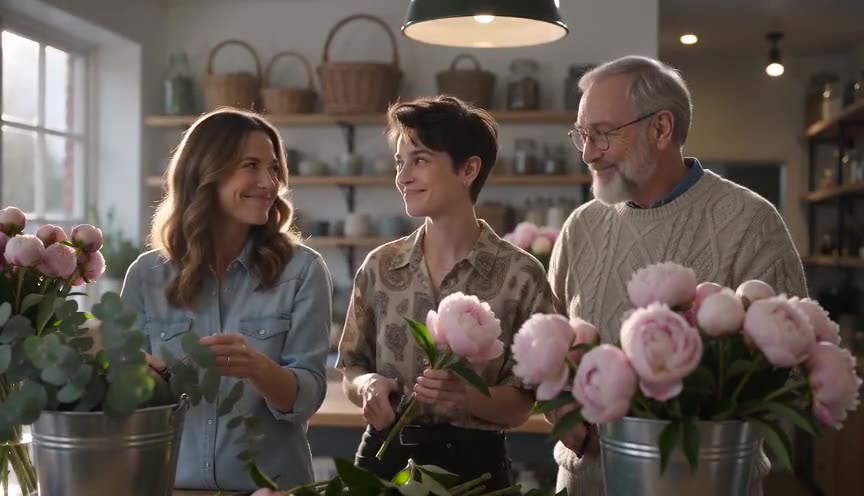
A three-shot adds a third person to the frame, which changes the geometry from a dialogue to a group dynamic; the two-shot keeps the focus strictly on a pair.
In film
Before Sunrise (1995)
Long unbroken two-shots follow the couple walking and talking, keeping both faces present through entire conversations.
Persona (1966)
Bergman repeatedly frames Elisabet and Alma together in tight two-shots, making their mirrored faces and shifting dominance visible.
The prompt
Name the framing directly (two-shot, both subjects in frame, waist-up) and describe where each person stands relative to camera and to each other, since models default to isolating one subject otherwise. Specify a lens (35mm or 50mm) and eye level so one face doesn't go soft or oversized. Keep the composition static or nearly static, since AI models tend to drift toward a slow push on one subject; anchor both faces at similar distance from camera and describe subtle, not extreme, movement between them.
The exact prompt that rendered the video on this page. Keep the description of the move, change the subject and the setting.
Two-shot at a skate park at sunset: two adult skaters, a woman in her twenties and a man in his thirties, stand side by side leaning on their skateboards at the edge of a concrete bowl, both framed from the waist up at eye level with a 50mm lens. The camera holds static as warm orange light rakes across their faces, wind lifting loose strands of hair. One turns to speak, the other nods and glances toward the ramps behind them, both faces staying equally sharp and evenly lit throughout. No text.
Common mistakes
Letting one face dominate
Placing one subject closer to camera or brighter in the frame turns the two-shot into a de facto single with a background extra, losing the balance the shot is meant to hold.
Cutting too soon
Breaking to singles before the relationship has been established defeats the purpose of framing both people together in the first place.
Ignoring blocking
Relying on camera movement instead of rehearsed actor movement to create variety makes the shot feel static and directionless instead of alive.
Frequently asked questions
What is a two-shot?
A two-shot is a single frame that holds two people at once, usually from the waist or chest up, so their body language, distance and reactions to each other are visible without cutting between them.
How wide should a two-shot be framed?
It depends on the scene: waist-up is standard for dialogue, but a full-body two-shot works when the physical space between the characters, like a doorway or a gap on a couch, carries meaning.
Can a two-shot move?
Yes. A slow truck, pedestal or slider can follow both subjects as they walk or shift position, as long as the framing keeps holding both of them without favoring one.
How do I get a clean two-shot from an AI video generator?
State the framing explicitly, give each subject a fixed position relative to camera and to each other, and specify a moderate lens and eye level. Tools like Imaginode respond well to that level of physical detail rather than vague scene descriptions.