85mm portrait lens
Also called85mm prime, portrait prime lens, short telephoto portrait lens
The 85mm portrait lens is a short telephoto prime that produces a narrow angle of view and shallow depth of field at a comfortable shooting distance from the subject. It flattens facial features less than a wide lens and melts the background into soft, out-of-focus color, drawing the eye straight to the subject's face.
What it tells
Directors reach for the 85mm when a scene needs to feel intimate without the camera crowding the subject. The compression keeps proportions natural, the way the human eye reads a face at conversational distance, so the shot feels honest rather than distorted. Because the background dissolves into soft color, nothing competes with the actor's expression, and small shifts in the eyes or mouth carry the emotional weight of the scene. It is the lens of quiet confessions, farewells and close, wordless exchanges where the face alone must tell the story.
How it is shot
Mount an 85mm prime (commonly f/1.4 to f/1.8) on a full-frame camera and position the subject 6 to 10 feet from the lens, framing a close-up or medium close-up. Open the aperture wide to throw the background several stops out of focus while keeping the eyes and bridge of the nose sharp. The narrow field of view (about 28 degrees on full frame) means the camera sits farther back than it would with a 35mm or 50mm, so the operator often works off a tripod or slider rather than handheld to avoid amplified shake. A single key light with a soft source, like a beauty dish or octabox, models the face cleanly since the lens flatters skin tone and minimizes distortion at the edges of frame.
When to use it
- Filming a tight close-up where you want the face isolated from a cluttered or busy background.
- Shooting an interview or confession where the subject's expression must carry the entire scene.
- Framing a portrait against distant scenery, like a skyline or landscape, without geometric distortion.
- Capturing a quiet emotional beat between two characters where background noise would break the mood.
Not to be confused with
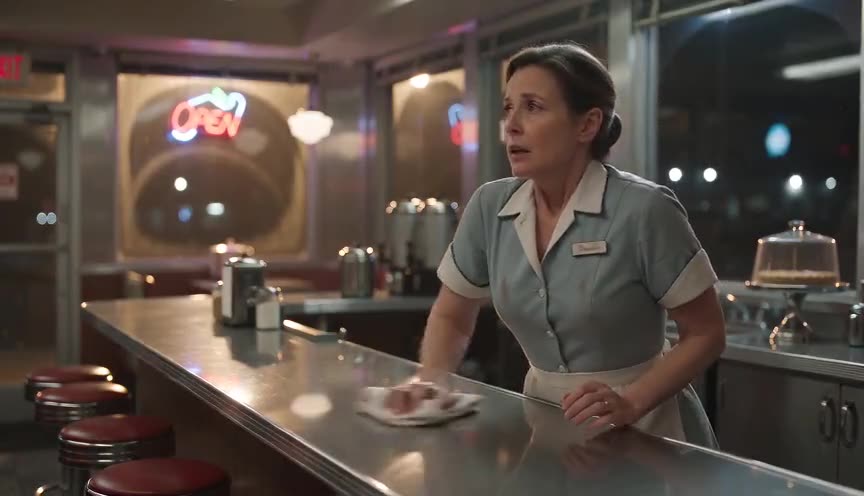
A 50mm lens matches roughly the human eye's field of view and requires the camera closer to the subject, giving a more neutral, less compressed look than the 85mm, which flatters faces more and separates them further from the background.
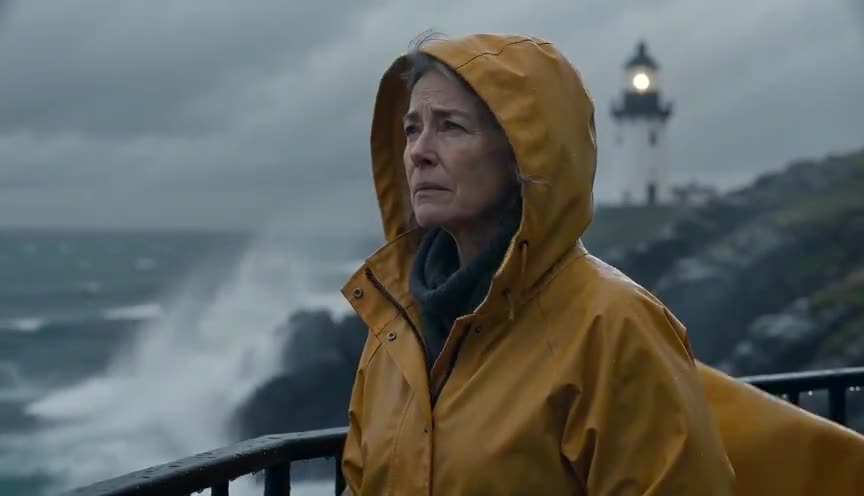
The 135mm compresses background and facial features even more than the 85mm and demands more shooting distance, making it better for extreme isolation but harder to use in tight spaces or fast-moving dialogue scenes.
In film
The Silence of the Lambs (1991)
Tak Fujimoto's direct-to-camera close-ups of Clarice and Lecter use short telephoto portrait framing, isolating faces with shallow focus during their interviews.
12 Angry Men (1957)
Boris Kaufman's late-film close-ups shift to longer portrait lenses around 75mm and 100mm, compressing the jury room and isolating faces.
The prompt
Name the lens directly (85mm, portrait lens, short telephoto) and pair it with an aperture cue like f/1.8 or shallow depth of field so the model renders a compressed, soft background instead of a wide establishing view. Specify a close-up or medium close-up framing and describe what stays sharp (the eyes) versus what blurs (the background). Avoid wide-angle language like sweeping vista or fisheye, and skip extreme camera movement, since the technique reads through optics and stillness, not motion.
The exact prompt that rendered the video on this page. Keep the description of the move, change the subject and the setting.
85mm portrait lens close-up of a middle-aged woman with sun-weathered skin standing beside her parked motorcycle on an empty desert highway at dusk. The camera stays locked on a tripod at eye level, six feet from her face, aperture wide open so her eyes and freckles stay sharp while the flat desert horizon and distant orange sky dissolve into soft, warm bokeh behind her. She turns her head slowly toward the fading light, hair lifting slightly in a light breeze, background traffic reduced to blurred streaks of headlight color. No text.
Common mistakes
Shooting too far back
Backing up to compress more actually pushes the subject smaller in frame; the effect only reads if you keep a close-up or medium close-up framing.
Stopping the aperture down too much
Closing the iris past f/4 or f/5.6 sharpens the background and kills the soft bokeh that defines the portrait look.
Using it for wide group shots
The narrow angle of view of an 85mm makes it awkward for anything wider than a two-shot; it crowds the frame or forces the camera far outside the room.
Frequently asked questions
What is an 85mm portrait lens?
It's a short telephoto prime lens, commonly used at f/1.4 to f/2.8, that isolates a subject's face with shallow depth of field and minimal facial distortion, shot from a comfortable conversational distance.
Why do cinematographers prefer 85mm over 50mm for close-ups?
The 85mm compresses the background more and requires more distance from the subject, which flatters facial proportions and lets the camera stay out of the actor's personal space during emotional scenes.
What aperture should I use with an 85mm lens for portraits?
Most portrait work sits between f/1.4 and f/2.8, wide enough to blur the background into soft color while keeping the eyes and eyebrows in sharp focus.
Can AI video tools like those on Imaginode recreate an 85mm lens look?
Yes, if you name the lens and aperture explicitly in the prompt and describe a close framing with a soft, blurred background, models such as Kling or Veo will approximate the compression and bokeh of an 85mm portrait lens.