Telephoto compression
Also calledLens compression, Perspective compression, Foreground-background compression
Telephoto compression is the optical effect produced by shooting with a long focal length lens from a distant camera position, which flattens depth and makes background objects appear closer to, and larger relative to, the subject than they really are. It reads to the viewer as claustrophobia, intimacy, or an unreal density of space.
What it tells
Directors reach for compression when they want to erase the sense of empty air between a character and their world, either to trap them in a crowd, a wall of enemies, or a symbolic obstacle, or to press a distant background right up against a face for pure intimacy. It removes the depth cues of a normal lens and replaces them with a flattened, almost painterly stack of planes, which feels psychologically loaded rather than simply photographic.
How it is shot
The camera is placed far from the subject, often 20 to 60 feet away, and fitted with a lens of 135mm or longer, sometimes 200mm or 300mm. The narrow angle of view magnifies distant objects relative to the foreground, so background elements that would look small and separate on a wide lens now appear large and stacked close behind the subject. A wide aperture around f/2.8 adds shallow depth of field, softening the background while keeping the subject sharp. Because magnification amplifies camera shake, a tripod, monopod, or heavy support is standard, and focus pulling becomes critical since the plane of sharp focus is thin. Lighting must reach the subject across the extra distance, usually with stronger or more concentrated sources.
When to use it
- Isolating a fighter or athlete against a crowd that should feel oppressively close
- Making a distant landmark or skyline loom unnaturally large behind a foreground subject
- Building tension in a chase or standoff by stacking pursuer and pursued in the same flattened plane
- Shooting a portrait where you want creamy background blur with almost no visible depth recession
Not to be confused with
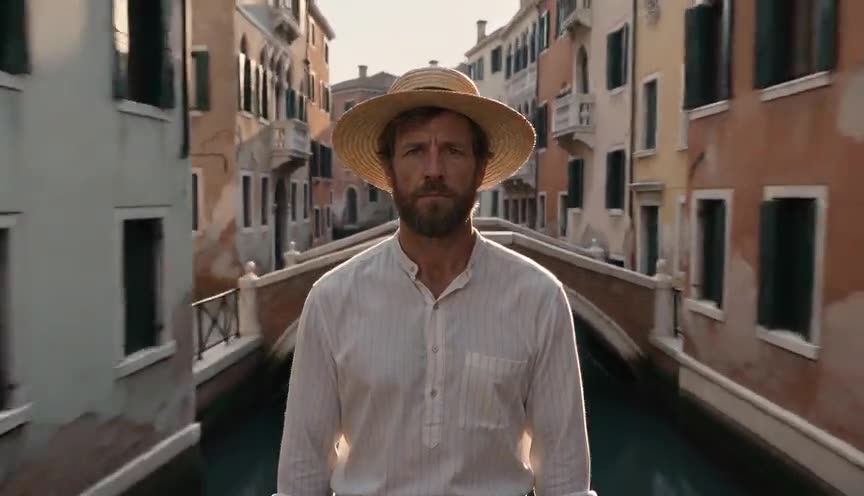
A dolly zoom actively changes compression during the shot by moving the camera while zooming the opposite way, so background scale shifts as you watch. Telephoto compression is a fixed lens choice with no camera movement required.
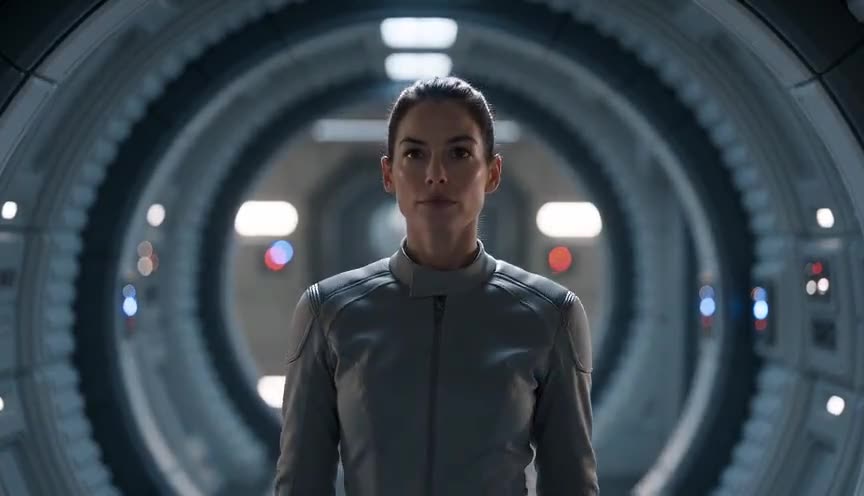
Shallow depth of field is about how much is in focus, achieved with wide aperture on any lens. Telephoto compression is about spatial scale and flattening, achieved with focal length and distance, though the two often appear together.
In film
The Graduate (1967)
Benjamin's sprint toward the church is filmed with a long lens from far away, flattening the road so he seems to run without advancing.
Lawrence of Arabia (1962)
Omar Sharif's desert entrance was shot with an extreme telephoto lens, compressing distance and heat shimmer so the distant rider seems impossibly close yet unreachable.
Seven Samurai (1954)
Kurosawa uses long lenses in the final battle, stacking horses, villagers, rain, and mud into dense planes that make the village feel chaotic and compressed.
The prompt
Name the focal length directly, such as 200mm or long telephoto, and describe the camera as static and far from the subject. Use words like flattened, compressed, stacked planes, or background looming close, and mention background blur separately if you also want shallow depth of field. Avoid contradictory terms like wide-angle or fisheye, and do not ask for dramatic camera movement, since compression reads best as a held, quiet frame.
The exact prompt that rendered the video on this page. Keep the description of the move, change the subject and the setting.
Telephoto compression: a locked-off shot filmed with a 200mm lens from across a boxing gym, camera positioned far from the action so the long focal length flattens depth, placing a boxer hitting a heavy bag in the foreground on the same visual plane as rows of sparring boxers in the background, who appear unnaturally large and close despite being many feet away. Shallow depth of field softens the background slightly while the foreground stays sharp, hard gym lighting glinting off sweat, dust hanging in the compressed air between planes. No text.
Common mistakes
Shooting too close
Standing near the subject with a long lens crops tight but does not compress anything, since compression needs real physical distance between camera and subject.
No stabilization
Long lenses magnify every wobble, so handheld shooting without a tripod or monopod turns compression into an unusable shaky mess.
Ignoring focus depth
The plane of sharp focus is thin at long focal lengths and wide apertures, and a missed focus pull ruins the shot faster than on a normal lens.
Frequently asked questions
What is telephoto compression?
It is the visual flattening that happens when you shoot with a long lens from far away, making background objects appear closer to and larger relative to the foreground subject than they actually are.
What focal length gives the strongest compression?
Effects become clearly visible around 135mm and grow stronger through 200mm, 300mm, and beyond, since a narrower angle of view magnifies distant objects more relative to the foreground.
How is telephoto compression different from a zoom?
A zoom lens can achieve compression at its long end, but zooming during a shot changes framing while the camera stays put. Compression itself is a static property of focal length and camera distance, not movement.
Can AI video tools generate telephoto compression?
Yes, tools like those on Imaginode can render it if you specify a long focal length, a static distant camera, and flattened background scale in the prompt, since the model needs those physical cues to fake the optics correctly.