Interview framing
Also calledTalking head framing, Off-axis interview shot, Two-thirds interview composition
Interview framing is a medium close-up composition that places the subject off-center, looking across the frame toward an unseen interviewer instead of at the lens. It signals to the viewer that they are watching a real conversation, not a direct address, which builds a sense of authenticity and trust.
What it tells
Directors use this framing to make a subject feel like a witness rather than a performer. By keeping the eyeline off-camera and the frame slightly asymmetrical, the shot borrows the intimacy of a private conversation while still giving the editor room to cut in footage, reactions or archival material. The convention is so familiar from news and documentary that audiences read it instantly as credible, first-person testimony rather than staged narration.
How it is shot
The camera sits at the subject's eye level, usually on a 50mm or 85mm lens to keep the background softly out of focus. The subject is placed at roughly one third of the frame, with the wider negative space on the side they are looking toward, where the interviewer sits just off-axis, 15 to 30 degrees from the lens. Headroom is consistent, framing runs from mid-chest to a hand's width above the head, and the shot is static or on a slight locked tripod to avoid drawing attention to the camera. Soft key light from a window or a large diffused source keeps skin tones even across multiple takes, since the same setup is often reused for many separate interview sessions.
When to use it
- Filming a documentary subject recounting a personal story or eyewitness account
- Recording a corporate testimonial or customer story for marketing use
- Shooting expert commentary that will be cut against broll or archival footage
- Producing a news segment where credibility depends on a natural, unforced eyeline
Not to be confused with
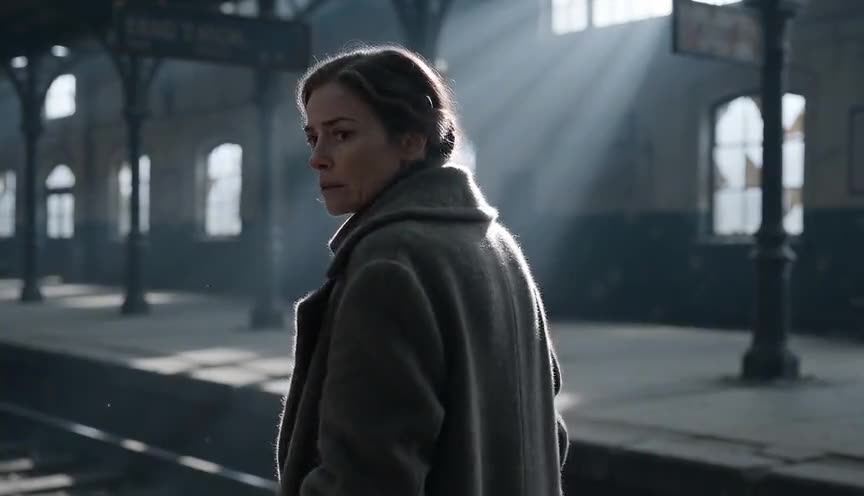
Medium close-up describes only the size of the frame. Interview framing adds the specific rule of off-center placement and an off-axis eyeline aimed at an unseen interviewer, which the plain medium close-up does not require.
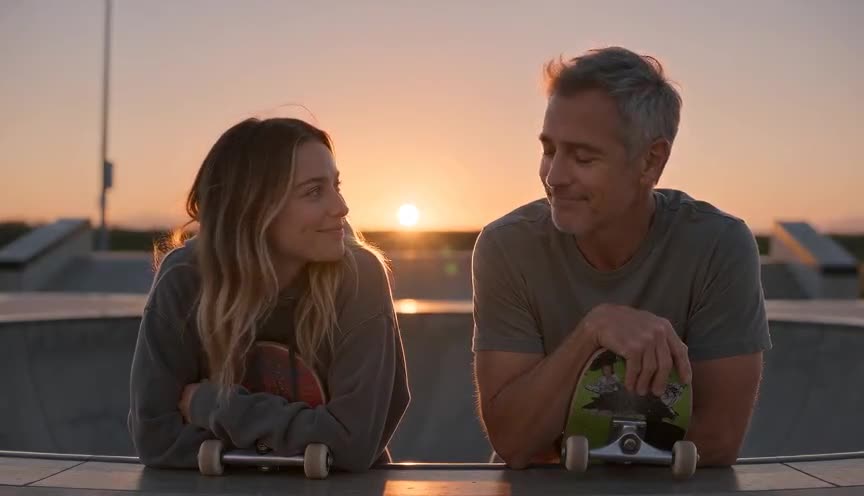
A two-shot keeps both the interviewer and subject visible in frame, showing the exchange itself. Interview framing isolates only the subject, implying the other person's presence through the eyeline instead of showing them.
In film
The Last Dance (2020)
Uses the classic off-axis interview setup throughout, with subjects consistently framed looking toward an unseen interviewer to anchor the archival footage.
Won't You Be My Neighbor? (2018)
Relies on tightly consistent interview framing for its talking heads, letting emotional testimony carry scenes without cutting away from the composition.
The prompt
Name the off-center placement and the eyeline explicitly: state which third of the frame the subject occupies and that they look toward an unseen interviewer, not the lens. Specify a medium close-up, eye-level camera and soft background blur so the model does not default to a centered, camera-facing portrait. Avoid words like 'looking at camera' or 'symmetrical', which push the model toward the opposite framing.
The exact prompt that rendered the video on this page. Keep the description of the move, change the subject and the setting.
Interview framing inside a sunlit greenhouse, a middle-aged woman with short gray hair seated among rows of potted plants, positioned in the right third of the frame with open negative space to her left where she looks, addressing an unseen interviewer off camera rather than the lens. Eye-level medium close-up on an 85mm lens, soft window light from the left, greenery blurred behind her in shallow depth of field. Camera locked static, she speaks with small natural head tilts and hand gestures, no camera movement. No text.
Common mistakes
Centering the subject
Putting the subject dead center removes the sense of a conversation and makes the framing read as a portrait or a direct-to-camera address instead.
Eyeline drifting to the lens
If the subject looks straight into the camera partway through, it breaks the documentary illusion and confuses the viewer about who they are talking to.
Changing the setup between takes
Shifting the camera height, lens or headroom across sessions makes cuts between different interviews feel jarring instead of part of one consistent visual language.
Frequently asked questions
What is interview framing?
It is a composition rule for talking-head shots where the subject sits off-center in a medium close-up and looks toward an unseen interviewer rather than the lens, giving the footage a natural, testimony-like feel.
Why don't interview subjects look at the camera?
Looking at an off-camera interviewer keeps the moment framed as a real conversation. Direct-to-camera address, sometimes called breaking the fourth wall, is a distinct and much rarer choice that feels more confrontational or intimate.
Which side should the subject face?
Either side works, but keep it consistent for one subject across a shoot. The extra negative space should always sit on the side they are looking toward, which also gives editors room to place lower-third graphics.
Can I get interview framing from an AI video model?
Yes. Describe the off-center placement, the off-axis eyeline and the medium close-up explicitly in the prompt. On Imaginode this framing renders reliably once the eyeline direction and frame position are stated in plain terms.