Aerial pullback
Also calledDrone pullback, Reveal drone shot, Rising retreat shot
Aerial pullback is a camera movement, usually flown by drone, that rises and retreats from a subject at the same time, shrinking it against an expanding wider view. It moves the viewer from close intimacy to a sense of scale and distance, often used to close a scene or a story.
What it tells
Directors reach for an aerial pullback when a story needs to step back from a character and let the world absorb them, for better or worse. The rising, receding motion reads as closure: a hero becomes a speck in a landscape, a crime scene becomes one block among many, a triumph becomes part of a skyline. Because the movement never stops to let the eye rest, it also carries finality, the visual equivalent of a curtain falling, which is why editors save it for the last shot of a sequence or an entire film.
How it is shot
A drone (or a cable cam or crane rigged for combined vertical and horizontal travel) starts a few feet from the subject, roughly at eye level, framed close enough to read faces or details. The pilot lifts the aircraft while simultaneously flying it backward and often slightly upward in pitch, so altitude and distance increase together rather than in two separate moves. A wide lens, around 16 to 24mm equivalent, keeps the horizon and surrounding geography entering the frame as the subject shrinks. The move typically runs 5 to 15 seconds at a steady, decelerating speed so the reveal does not overshoot, with GPS-stabilized flight modes or motion control removing hand shake. Score often swells to match the rising altitude.
When to use it
- To end a scene or film, showing a character shrinking into the landscape they belong to now.
- To reveal the true scale of a disaster, crowd, or location the story has kept hidden until now.
- To move from an intimate character moment into a wide establishing view of the surrounding world.
- To signal closure or departure, echoing the feeling of leaving a place behind for good.
Not to be confused with
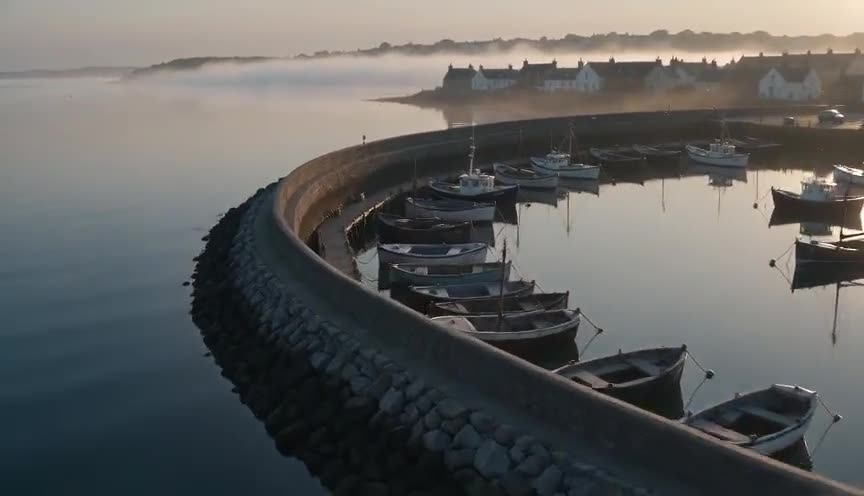
An aerial shot is any shot taken from above; an aerial pullback is a specific move within that category, defined by simultaneous rising and retreating motion away from a subject.
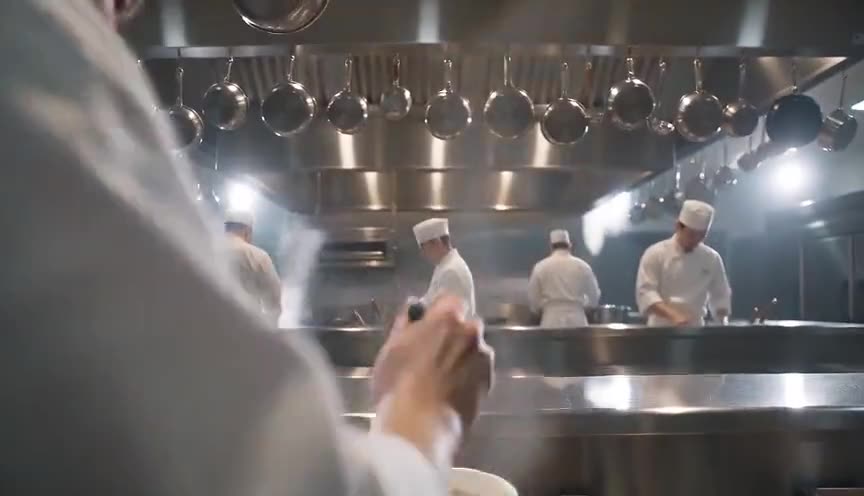
A crane up only lifts the camera vertically over a fixed point; an aerial pullback adds horizontal retreat and typically flies much higher and farther, usually by drone rather than a mechanical arm.
In film
Koyaanisqatsi (1982)
Ron Fricke's aerial cinematography repeatedly pulls back from single figures and buildings into vast desert and city grids, a hallmark of the film's scale-shifting style.
Baraka (1992)
The film uses slow aerial pullbacks over ritual sites and crowds to shift from human detail to planetary pattern, a technique carried over from its predecessor Koyaanisqatsi.
The prompt
Name the movement directly and describe both motions at once: camera rising and pulling back simultaneously, not one after the other. State a wide lens, around 16 to 24mm, so the model keeps depth and horizon legible as the subject shrinks. Give a clear starting distance (close, eye level) and a clear ending scale (a wide view of the surroundings) so the reveal has a beginning and an end within 4 seconds. Avoid the word zoom, which pushes the model toward a static drone with a lens change instead of true flight.
The exact prompt that rendered the video on this page. Keep the description of the move, change the subject and the setting.
Aerial pullback: the camera starts close to a solo guitarist standing on the rooftop terrace of a recording studio at dusk, framed at eye level near a string of hanging lights above a small mixing desk. In one continuous shot, the drone rises and pulls back at the same steady speed, the wide-angle lens keeping the terrace in frame as it shrinks against the widening rooftop, then the studio building, then the surrounding city rooftops and glowing windows spreading into view. The guitarist stays centered but grows smaller, the motion never speeds up or stutters. No text.
Common mistakes
Reveal too fast
Pulling back or rising too quickly makes the shot read as a glitch rather than a deliberate reveal; keep the movement controlled and roughly linear or gently decelerating.
Vertical only
Rising straight up without retreating horizontally turns the shot into a crane up, losing the pullback's sense of distance and departure.
Wrong lens
Using a long or normal lens compresses the reveal and the widening background never reads; a wide lens is needed to make the surroundings visibly grow around the shrinking subject.
Frequently asked questions
What is an aerial pullback?
It is a drone or crane movement that rises and moves away from a subject at the same time, so the subject shrinks against an expanding view of its surroundings. It is most often used as a closing or revealing shot.
How high does a drone need to fly for an aerial pullback?
There is no fixed number; short pullbacks over a person might end at 30 to 60 meters, while a full landscape or city reveal can climb to 150 meters or more, depending on how much context needs to enter the frame.
What is the difference between an aerial pullback and a dolly out?
A dolly out stays at ground level and moves straight back on wheels or a track; an aerial pullback adds altitude, so the change in scale and geography is much larger and reads as a shift in perspective, not just distance.
Can AI video tools generate an aerial pullback shot?
Yes. Platforms such as Imaginode can render this move if the prompt describes the rising and retreating camera explicitly, along with a wide lens and a clear starting and ending scale, rather than relying on the word drone alone.